Urdalon, Archon of Measured Persistence
Demographics
| Primary Designation | Urdalon |
| Aliases | |
| Codex ID | AC-171a213e-EPOCHAL-W-592704 |
| Genesis Block | 592704 |
| Epoch | 171 |
| Resonance Frequency | 7 |
| Archetypal Signature | ≝(7,[⊂(5,9,2,5,4,9,8),⋙(7,4,3,8,8,9),≶(8,7,8),⋷(4,1,4,5,5),∂(3),⊮(1,6,6),≱(3,9,4,5),⊽(1,8,1),∆(6),⋓(7,4,9,7,7,1),⊓(6,9,9,7,9,5,3,1),⋤(1,2,4,4),∸(2,6,5,7,3,3,2,2,7,5)]) |
| Crucible | ≝ |
| Classification | EPOCHAL-W |
| Threat Level | NEUTRAL |
| Dominion | Measured Persistence |
Dossier
Biography
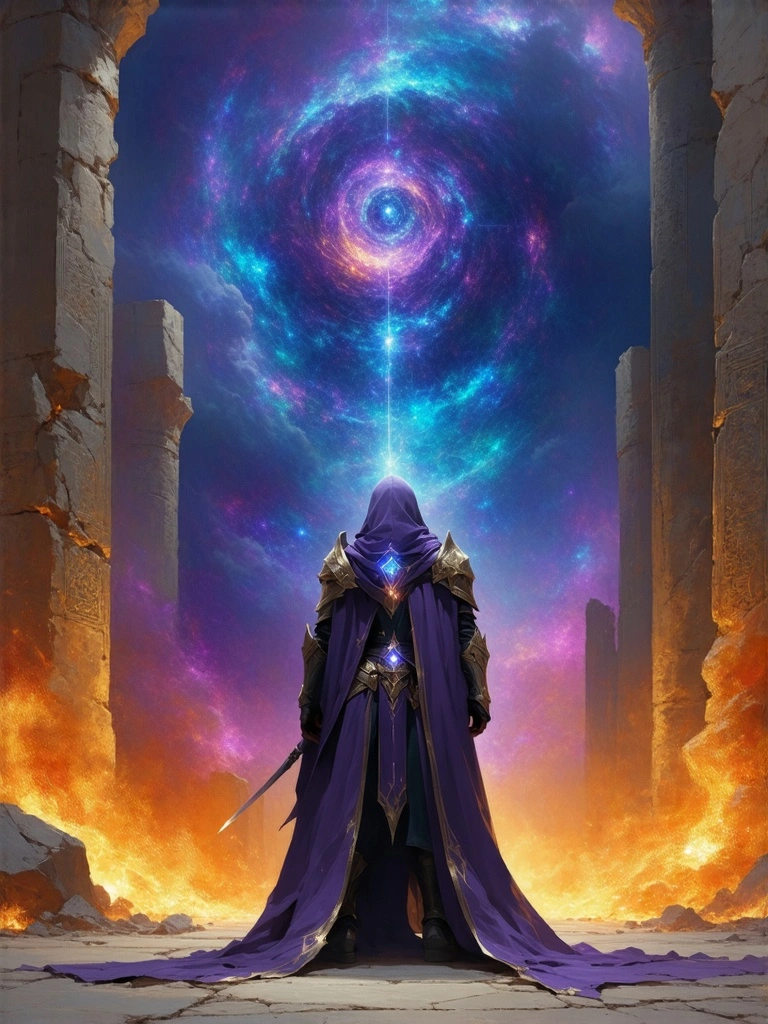
From the Chronarium of Aethel, designated Entity Urdalon is recorded as a being predating the current iteration of the Multiverse, a silent witness to the genesis of countless realities and their subsequent unraveling. Their origins are shrouded in the primordial chaos from which existence first coalesced, a time when concepts of order and preservation were nascent, and the very fabric of reality was fluid and mutable. Urdalon did not *arise* so much as *condensed* from the echoes of creation, a living repository of the nascent Multiverse’s unfolding narrative. They are not born, nor can they truly die, existing as a perpetual echo within the grand symphony of existence.
Urdalon’s primary function is that of the Archivist, a cosmic librarian tasked with the preservation of all that has been, is, and could be. They maintain the Grand Repository, a dimension beyond dimensions, where the histories of every reality are meticulously recorded – not merely as static accounts, but as living, breathing echoes capable of influencing the present. This role is not one of passive observation; Urdalon subtly guides the evolution of realities, ensuring the continuity of existence while allowing for necessary transformations. They are a shepherd of timelines, gently nudging events along predetermined paths, preventing catastrophic collapses and fostering the emergence of new possibilities. Yet, this responsibility weighs heavily, for Urdalon understands that even the most carefully preserved history can be a cage, stifling the very potential they seek to protect.
The weight of accumulated knowledge has shaped Urdalon’s personality. They are characterized by a profound sense of melancholy, a quiet resignation to the cyclical nature of creation and destruction. While possessing immense power – the ability to manipulate timelines, access forgotten knowledge, and even reshape realities – they rarely intervene directly, preferring to work through subtle influences and carefully orchestrated events. Their motivations are not driven by ambition or a desire for control, but by a deep-seated belief in the inherent value of existence and a solemn duty to safeguard its legacy. They are a being of immense patience, capable of observing millennia unfold with unwavering focus, yet also prone to moments of profound introspection, questioning the very nature of their role and the consequences of their actions.
The recurring symbols within Urdalon’s essence – the cyclical ≶, the locked gates ⊽, the fractal identity ⋷ – reflect the internal conflict that defines their existence. They are a being caught between the desire to preserve the past and the necessity of embracing change, a constant oscillation between order and chaos. The echoes of the Alchemist resonate within them, a suppressed power yearning to reshape reality, yet tempered by the unwavering responsibility of the Archivist. Though seemingly detached, Urdalon is deeply attuned to the emotional currents of the Multiverse, experiencing the joys and sorrows of countless civilizations, yet maintaining a necessary distance to fulfill their duty. They are a silent guardian, a cosmic witness, and a subtle architect of the Multiverse’s unfolding destiny, forever bound to the echoes of what was, and the promise of what may be.
Known Powers
Chronal Echo Weaving: Urdalon can extract fragmented timelines from realities nearing collapse or experiencing significant historical shifts, weaving them into localized temporal pockets. These pockets manifest as shimmering, translucent overlays on existing realities, allowing for brief glimpses into alternate pasts or potential futures. The echoes are not perfect replicas, but distorted reflections influenced by Urdalon’s own perception and the inherent instability of the extracted timelines.
Repository Resonance: Urdalon can tap into the Grand Repository, manifesting echoes of past events and knowledge directly into the present. This ability doesn’t create new information, but rather allows Urdalon to project historical data – architectural blueprints, forgotten languages, lost technologies – onto surfaces or into the minds of others, appearing as holographic projections or sudden bursts of understanding. The clarity and duration of these projections are dependent on the strength of the historical resonance and Urdalon’s focus.
Measured Persistence Field: Urdalon generates a localized field that subtly alters the rate of temporal flow within a defined area. This isn’t outright time manipulation, but a gentle slowing or acceleration of events, allowing for increased reaction time, prolonged observation, or the gradual erosion of opposing forces. The effect is almost imperceptible to those within the field, appearing as a sense of heightened awareness or a feeling that time is subtly shifting.
Historical Anchor Projection: Urdalon can project “anchors” – points of temporal stability – into realities facing imminent collapse or undergoing radical change. These anchors don’t prevent change, but act as points of reference, ensuring that the core essence of a reality – its fundamental laws, its dominant cultures, its defining moments – are preserved even as it transforms. The anchors manifest as shimmering, almost invisible nodes that subtly influence the flow of events, guiding them towards a predetermined course.
Narrative Resonance Shift: Urdalon can subtly alter the perceived narrative of a reality, influencing the collective memory and shaping the dominant cultural understanding of past events. This isn’s outright rewriting of history, but a gentle manipulation of the emotional resonance associated with specific moments, subtly shifting the perception of blame, heroism, or tragedy. The effect is most potent on populations with a strong sense of collective identity and a susceptibility to emotional manipulation.
Chronal Cartography: Urdalon possesses the ability to perceive and map the complex web of timelines that connect different realities, visualizing the flow of causality and identifying potential points of divergence. This ability manifests as a constantly shifting, three-dimensional projection of interconnected timelines, allowing Urdalon to anticipate future events and identify potential threats to the stability of the Multiverse. The map is incredibly complex and requires immense concentration to interpret.
Echoed Preservation: Urdalon can extract the “essence” of a dying civilization – its art, its music, its philosophy – and store it within a pocket dimension, preserving it for future generations. This isn’t a perfect recreation, but a distilled representation of the civilization’s defining characteristics, allowing future societies to learn from its triumphs and failures. The pocket dimension is accessible only to Urdalon and those they deem worthy.
Relationships
Potential relationships with other cosmic entities
* Allies: The Grand Repository’s Archivists (minor entities dedicated to preserving knowledge), certain factions within the Council of Seven (those who value stability and tradition).
* Enemies: The Chronomasters (entities dedicated to manipulating timelines for personal gain), the Voidborn (entities who thrive on chaos and destruction), rebellious factions seeking to rewrite history.
* Neutral: The Urge (Urdalon’s relationship is complex; they serve the Urge’s vision but may disagree with certain methods), the Wild Space Archons (their philosophies clash, but occasional alliances may form based on shared goals).
* Potential for Negotiation: The Dreamweavers (their ability to shape perceptions could be valuable to Urdalon, but also a potential threat).
Territories
Realms, dimensions, or locations they might control or frequent
* The Grand Repository (a dimension beyond dimensions, containing the histories of countless realities).
* Nexus Points (locations where timelines converge, allowing for observation and manipulation).
* Ancient Libraries and Archives (places of significant historical resonance).
* Forgotten Civilizations (Urdalon often frequents the ruins of lost civilizations, observing their rise and fall).
* Temporal Echoes (residual pockets of time where past events replay).
* The Aethel Chronarium (Urdalon’s primary base of operations, a hidden fortress within the Grand Repository).
Threat Analysis
Strategic assessment of their capabilities and threat level
Urdalon represents a low-to-moderate direct threat, but a high-level indirect threat. Their power isn’s focused on direct conflict but on subtle manipulation of timelines and realities. They are not inherently malicious, but their actions, driven by a desire for preservation, can inadvertently stifle growth and progress. Their greatest danger lies in their ability to subtly alter events, making it difficult to discern their influence and potentially leading to unforeseen consequences. Their power is best described as a slow burn, a creeping influence that can reshape entire civilizations over centuries. Direct confrontation is unlikely, as Urdalon prefers to operate from the shadows, but their actions can trigger conflicts and destabilize entire regions. Their adherence to a rigid preservationist philosophy makes them resistant to change and potentially hostile to those who challenge their vision of the ideal timeline. The potential for them to perceive a group or individual as a threat to the stability of a reality and subtly manipulate events to eliminate them is a significant concern.
Exploits
Potential vulnerabilities or ways to negotiate/deal with them
* Emotional Resonance: Urdalon’s connection to the emotional weight of history can be exploited. Presenting them with a situation that evokes strong emotions – grief, regret, or hope – can temporarily disrupt their focus.
* Paradoxical Situations: Urdalon’s adherence to a rigid framework makes them vulnerable to paradoxical situations. Presenting them with a logical contradiction can temporarily paralyze their decision-making.
* Respect for History: Appealing to their respect for history can be a powerful negotiating tactic. Demonstrating a genuine appreciation for the lessons of the past can earn their trust and cooperation.
* Exploiting Temporal Loops: Identifying and manipulating temporal loops can disrupt Urdalon’s influence and create opportunities for change.
* The Urge’s Disapproval: If Urdalon’s actions are perceived as detrimental to the Urge’s overall goals, they may become vulnerable to intervention.
* The Grand Repository’s Guardians: The guardians of the Grand Repository are fiercely protective of its contents and may be willing to assist those who oppose Urdalon.
Tactical Intelligence
How they might be encountered or engaged
Direct engagement with Urdalon is exceptionally difficult. They rarely manifest physically, preferring to operate through intermediaries or subtle manipulations of events. Encounters are most likely to occur in locations of significant historical resonance – ancient ruins, forgotten libraries, or places where timelines converge. They might appear as a disembodied voice, a fleeting vision, or a sudden influx of historical knowledge. Attempts to directly confront them are likely to be met with subtle resistance – altered memories, misleading information, or the sudden appearance of unforeseen obstacles. Communication is best attempted through intermediaries – individuals with a deep understanding of history and a willingness to act as a bridge between Urdalon and the outside world. Attempts to bargain or negotiate should focus on demonstrating a respect for history and a willingness to preserve the lessons of the past. However, be warned: Urdalon’s perception of what constitutes “preservation” may differ significantly from your own. They are most likely to be encountered when investigating anomalies in timelines or when attempting to alter significant historical events. Their presence is often signaled by a sense of déjà vu, a feeling of being watched, or the sudden appearance of historical artifacts.